
Fairfax Needs Responsible Decisions, Not Unanswered Questions
Dear Friends and Neighbors,
This week's Planning Commission meeting raised serious concerns about the future of development in Fairfax and the responsibility of our elected officials to protect the public interest.
Despite substantial public opposition and a divided Commission, proposed Small Area Plan zoning amendments advanced without a comprehensive assessment of their cumulative impacts.
Now the Mayor and City Council will be asked to codify these changes without fully understanding their consequences.
That concerns me deeply.
4,700 More Homes — What Does That Mean for Fairfax?
Our four Small Area Plans contemplate approximately 4,700 additional housing units, equivalent to nearly 45% of our existing housing stock. Using current citywide average household occupancy, that could mean approximately 12,600 additional residents.
These are planning scenarios, not approved construction forecasts. But the proposed zoning changes could allow substantially taller and denser development, including seven-story buildings and higher in some locations, with more development permitted by right.
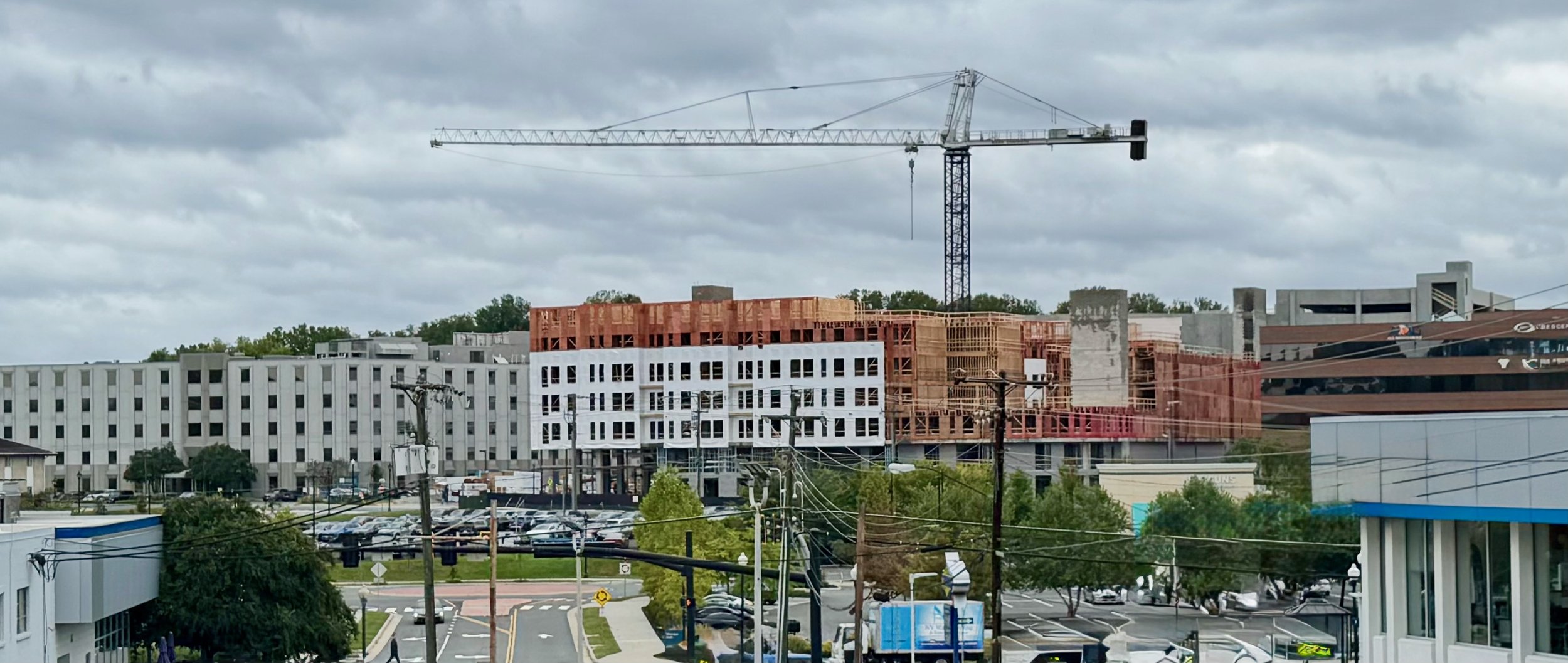
The “Botanist” apartment building at 10350 Eaton Place, featuring seven stories and 260 residential units, is now under construction.
These are consequential decisions for our six-square-mile city.
What would this mean for traffic, public safety, schools, infrastructure, taxes, our environment, and neighborhood quality of life?
We should have answers before changing the rules.
The Traffic Impacts Alone Deserve Serious Attention
Using Institute of Transportation Engineers methods and assumptions from local development studies, I conducted a preliminary assessment of the potential transportation impacts.
The results suggest approximately 17,500 additional vehicle trips on a typical weekday, after illustrative adjustments for alternative transportation and internal trips.
For perspective, a City transportation study reports approximately 41,000 vehicles on weekdays along a segment of Fairfax Boulevard. The estimated additional trips across our city would be equivalent to roughly 43% of that existing traffic volume.
This does not mean Fairfax Boulevard traffic would increase by 43%. Actual impacts would depend on where development occurs, existing traffic displaced by redevelopment, and how trips are distributed throughout our road network.
But it illustrates why a comprehensive assessment is essential, particularly in a city with limited opportunities to expand its roads.
Fact-Finding Is Not Fearmongering
Responsible decisions require examining consequences, comparing alternatives, and involving the community before making changes that may be difficult to reverse.
We should evaluate different development densities and timelines, transportation and safety impacts, and opportunities to strengthen our commercial tax base.
My opponent supported advancing the amendments and characterized concerns about this type of analysis as "fearmongering" during our mayoral debate.
I believe residents can judge the difference.
Asking questions and examining evidence is not fearmongering. It is responsible fact-finding.
My preliminary analysis is not a prediction of exactly what will happen. It identifies potentially significant impacts that deserve closer examination.
The Mayor's Duty of Care
During our mayoral debate, I emphasized that elected officials are the final arbiters of public decisions. Our responsibility is to understand how those decisions affect people's everyday lives.
The Mayor, as the presiding officer of City Council, must provide experienced leadership that ensures the Council has the information needed to make responsible decisions.
Recommendations from staff and advisory commissions are important, but they cannot replace the independent judgment of elected officials.
The Mayor's duty of care is to ensure that critical questions are answered before consequential decisions are made.
Throughout my 44-year career in government, business, nonprofit leadership, and academia, I have helped elected officials, technical experts, and community stakeholders navigate complex policy decisions through careful analysis, collaboration, and evaluation of alternatives.
That experience has prepared me to lead Fairfax through the important decisions ahead.
I support redevelopment and housing opportunities. But growth must be balanced, financially responsible, and informed by its cumulative consequences for our community.
Growth should strengthen Fairfax, not overwhelm it.
That is the leadership I will bring as Mayor, and why I am Ready to Lead on Day One.